

Wise Rubber · Anti-Slip Rubber
Choose the Right Industrial Anti-Slip Mat
Water, oil, and everyday foot traffic create different demands on a work-area mat. Start with your floor conditions, then compare drainage, material compatibility, and layout to find a suitable rubber solution.
Compare Your Options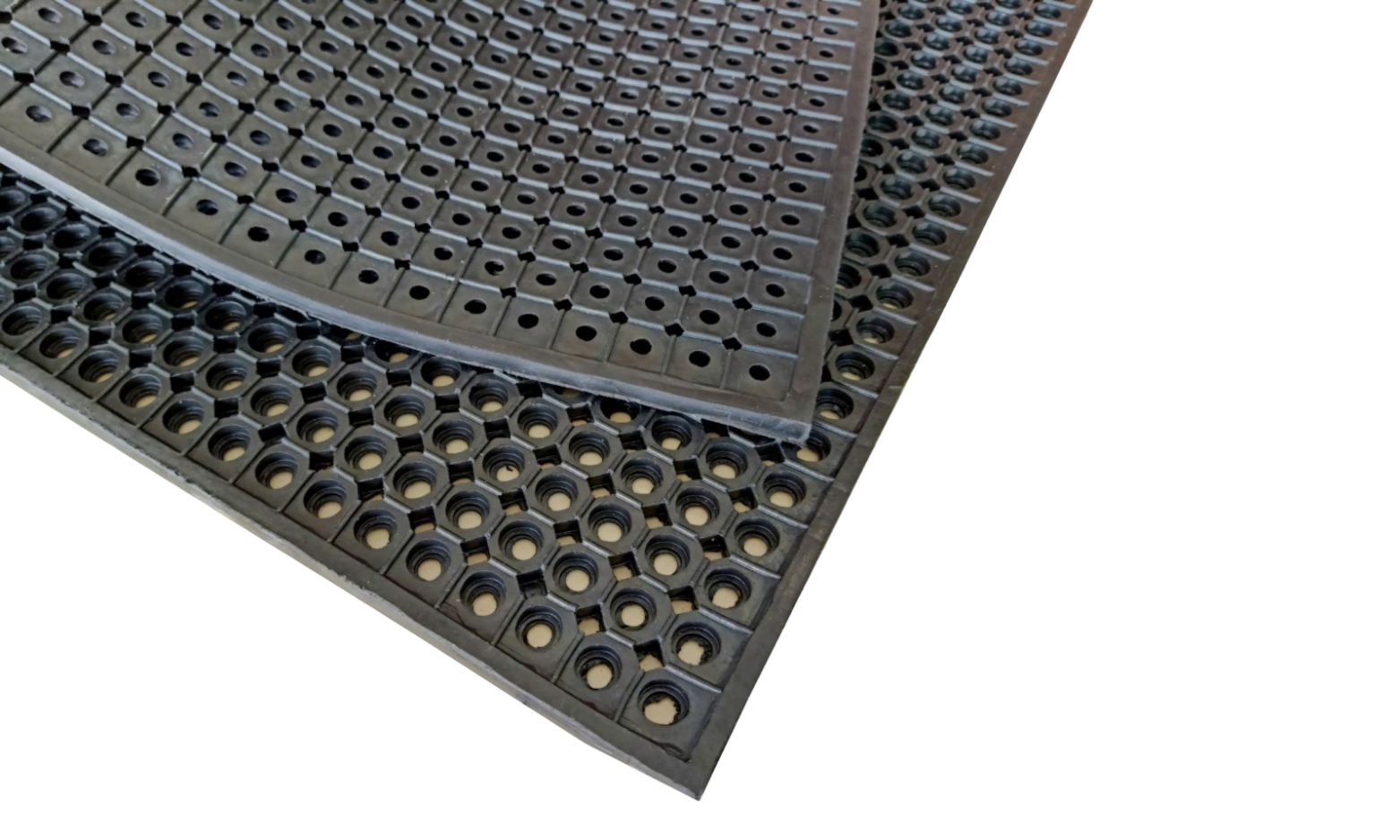
Wet floors
Let Water Drain Away
For wash areas, wet workstations, and frequently rinsed floors, consider an open-hole drainage mat. Match the mat to the underlying floor drainage and make sure it can be lifted for cleaning.
- Check where water collects and how it leaves the work area.
- Choose coverage that fits the standing area and cleaning routine.
- Review mat thickness and edges along pedestrian routes.

Kitchens & garages
Match the Rubber to Oil Exposure
For food preparation stations, garages, and oily work areas, compare both surface traction and resistance to the substances present. An anti-slip surface alone does not establish oil compatibility.
- Identify cooking oils, mineral oils, grease, or other contaminants.
- Confirm the exact rubber formulation for your exposure conditions.
- Include detergents and cleaning frequency in your selection.
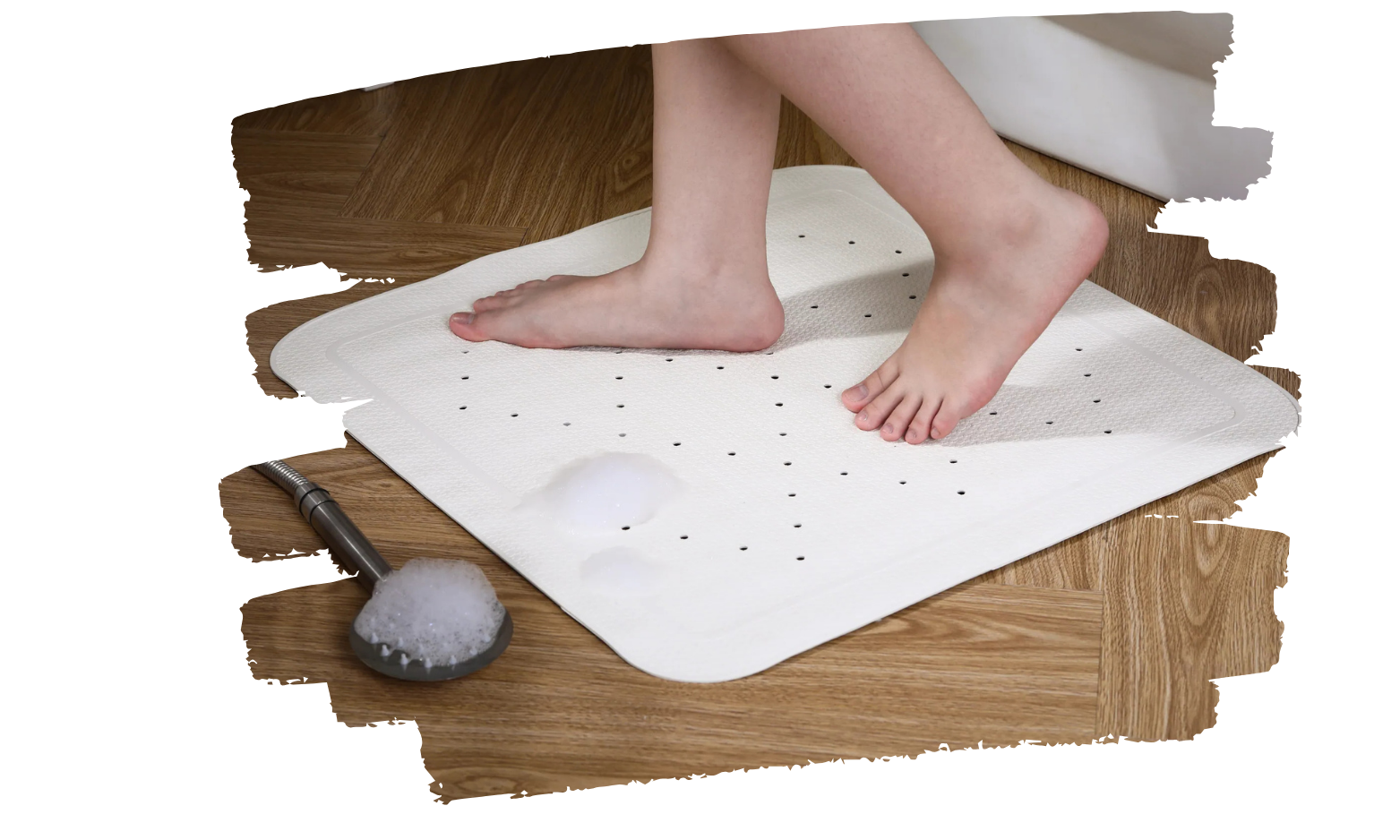
Baths & showers
Choose for Barefoot Wet Areas
Bath and shower mats serve a different setting from industrial work mats. Compare the mat size, surface feel, drainage, and attachment method for your bathtub or shower floor.
- Check whether the mat is suitable for your floor finish.
- For suction-cup designs, follow the model’s surface requirements.
- Allow access for rinsing and drying after use.
Selection guide
Which Anti-Slip Mat Fits Your Space?
Use the environment to narrow your options, then confirm the specifications of the individual mat.
| Environment | Start With | Check Before Choosing |
|---|---|---|
| Wet work areas | Drainage mats | Hole design, floor drainage, lifting and cleaning access, edge transitions. |
| Kitchens, garages & oily areas | Anti-slip oily mats | Oil type, rubber formulation, cleaning agents, drainage and layout. |
| Bathtubs & showers | Anti-slip bath mats | Floor finish, attachment method, fit, barefoot comfort and drying. |
Four Checks Before You Choose
1. Surface & Contaminants
Describe the floor finish and whether the area is dry, wet, greasy, or exposed to specific chemicals. These conditions help determine material and surface requirements.
2. Traffic & Placement
Measure the work zone and identify walking routes. If carts or equipment cross the area, discuss those loads and transitions before selecting a mat.
3. Drainage & Cleaning
Check the floor beneath the mat. Plan how to remove debris, lift the mat, clean both surfaces, and return it securely to position.
4. Performance Requirements
Share any required slip-resistance test method, oil compatibility, temperature range, or workplace specification. Ask for documentation for the exact product and formulation.
Frequently Asked Questions
Is every anti-slip rubber mat oil-resistant?
No. Slip resistance and oil resistance describe different properties. Confirm the rubber formulation and its compatibility with the oils, grease, and cleaning agents in your work area.
Should I choose a solid mat or a drainage mat?
Start with the liquid exposure and floor drainage. Open-hole mats allow liquids to pass through; the underlying floor still needs an appropriate drainage and cleaning arrangement. Discuss solid-surface options when an open-hole design does not suit your application.
Can I use an industrial mat inside a bathtub?
Select a mat intended for bath or shower use and follow its installation instructions. Industrial work-area mats and bath mats have different placement, attachment, and comfort requirements.
What information should I send for a recommendation?
Send the area dimensions, floor finish, a photo of the space, typical contaminants, traffic or loads, and cleaning routine. Include any required test method or material specification.
How should an anti-slip mat be maintained?
Follow the product’s care instructions. Clean the mat and the floor underneath, inspect for wear or damage, and check that the mat remains correctly positioned. Choose cleaning agents compatible with the rubber.
Discuss your application
Find a Mat That Fits Your Work Area
Tell us about your floor, exposure conditions, dimensions, and performance requirements. Our team can help you compare suitable rubber mat options.
Contact Us